
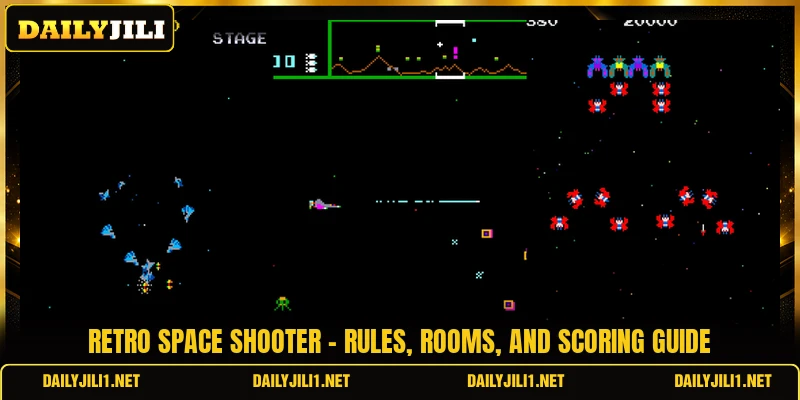
Retro Space Shooter uses classic space visuals, direct shooting controls, and short rounds that focus on timing, target choice, and score collection. The game appears at DAILYJILI for members who prefer simple action without long menus or difficult control systems. This article is written for players who need clear rules, room details, and step-by-step methods for making each round easier to understand.
Retro Space Shooter introduces swift pixel combat rounds
The game places a small spacecraft near the lower screen while enemy units enter from changing directions and move through fixed attack lanes. Each round presents targets with different movement speeds, hit requirements, and score values, so players must judge which threats deserve attention first. DAILYJILI keeps the main layout direct, with visible controls for firing, stake selection, round status, and any available power item.
In Retro Space Shooter, successful play depends on reading enemy motion before pressing fire, rather than sending shots without a clear target. Larger ships may remain longer on screen, while smaller units often move quickly and create narrow windows for accurate attacks. The simple presentation helps members follow each action, but every round still requires careful timing and clear target selection.
Core rules that define every scoring round
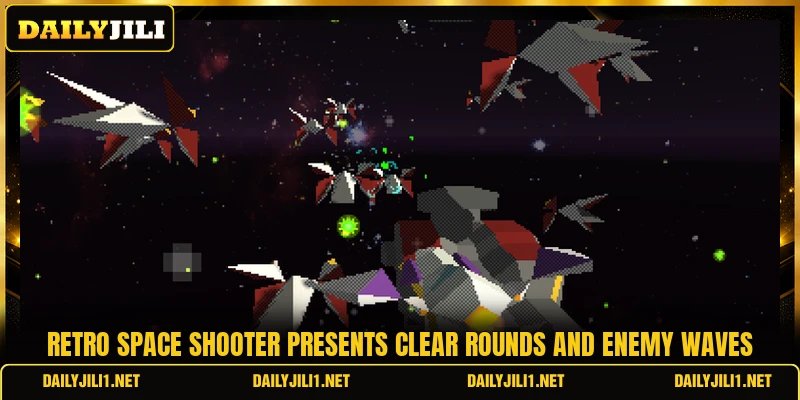
Every Retro Space Shooter round begins with a selected stake, a visible ship position, and enemy waves entering the active play area. Points or returns depend on the game result, target type, and round conditions shown before or during play.
Starting each round correctly
Players should first confirm the displayed currency, because the stake may appear in PHP or USD based on the chosen account setting. The selected amount should match the intended round size before the start button is pressed or any firing control becomes active. A final screen check also confirms whether automatic fire, manual fire, or a limited power mode is currently selected.
Once the round starts, enemies may arrive in groups, short lines, or separate paths that cross near the center. Firing immediately at every target can reduce accuracy because several ships may leave the screen before repeated shots connect. A better opening focuses on the first clear lane, then shifts attention when a higher-value target remains visible for longer.
Reading enemy behavior patterns
Enemy ships usually follow repeated routes, including straight passes, curved turns, diagonal entries, and short pauses before leaving the active field. Recognizing these routes helps players place shots slightly ahead of movement instead of aiming only at the current position. This approach gives each projectile more time to meet the target while it continues along the same path.
Fast units require earlier decisions because their screen time is limited, while slower targets allow more adjustment after the first shot. Members should watch how each wave enters before changing direction, since later enemies often repeat the same route with small timing differences. Careful observation supports cleaner attacks and reduces wasted shots during crowded sections of the round.
Retro Space Shooter point rules
Scores in Retro Space Shooter are linked to successful hits, target difficulty, and any active round feature displayed on the screen. Smaller enemies may need fewer hits, while stronger ships can demand repeated fire before their value becomes available. Players should read the paytable or information panel because symbol values and feature conditions can vary between versions.
View more: Pixel Invaders – Retro Shooting Action With Clear Rules
Some rounds may include bonus objects, temporary multipliers, shields, or grouped targets that create extra scoring chances when triggered correctly. These features should be used according to their visible conditions rather than assumed from earlier rounds or similar shooting games. The result screen records the completed outcome, allowing members to review the final score before starting another paid attempt.
Playing methods for precise and accurate attacks
A Retro Space Shooter session becomes easier to follow when players separate aiming, firing, and feature use into clear decisions. The methods below focus on target timing, power item use, and room selection without relying on random shooting.
Choosing the optimal firing rhythm
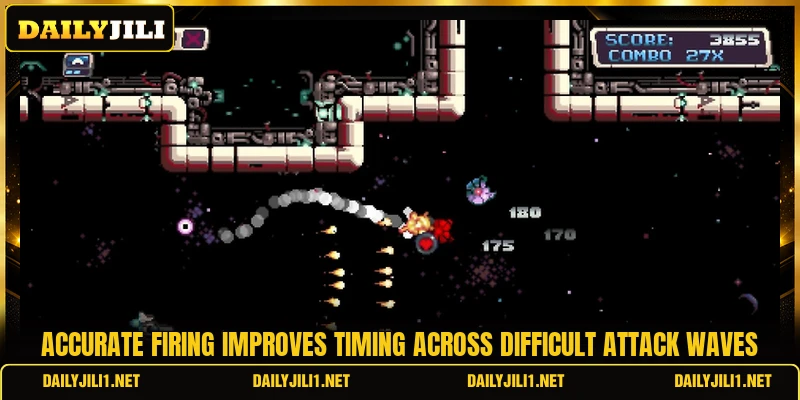
A steady firing rhythm helps players track moving enemies because each shot follows a clear timing pattern across the same lane. In Retro Space Shooter, short controlled bursts often provide better visual feedback than continuous fire during crowded enemy waves. Players can then adjust direction after seeing whether the first projectiles connect, miss, or arrive too late.
Long firing sequences may hide target movement behind effects, especially when several enemies cross the center at the same time. Pausing briefly between bursts keeps the screen readable and makes it easier to switch toward a slower or more valuable ship. This method also helps members notice when a wave ends and a different movement pattern begins.
Using power upgrades at key moments
Power items should be saved for situations where several targets overlap, a strong enemy remains visible, or a bonus object enters a clear lane. Using them too early can reduce their value because the screen may contain only small ships with limited scoring potential. The best moment is usually when the item can affect more than one target or support repeated hits on a durable unit.
In Retro Space Shooter, players should check the item label before activation because each effect may have a different range, duration, or target limit. A screen-wide attack suits crowded waves, while a focused beam may work better against one slow enemy with higher resistance. Understanding the displayed effect prevents confusion and keeps each feature tied to a specific purpose.
Adjusting play through room levels
Different rooms can change stake ranges, enemy speed, visual density, or access to certain round features, depending on the available game version. Members should compare the room information before entering, especially when amounts are listed in PHP or USD. A lower entry room may use simpler waves, while another setting may present faster movement and more demanding target sequences.
The best Retro Space Shooter room is the one whose pace and stake display remain easy to read throughout the full round. Players should test movement patterns with the smallest available entry in that room before choosing a faster or denser setting. This comparison shows whether the controls, enemy timing, and screen effects remain comfortable during active play.
View more Category: Arcade
Conclusion
Retro Space Shooter combines pixel-style space combat, direct controls, clear scoring rules, and changing enemy routes within short action-based rounds. Members can access the title through DAILYJILI, review the available room settings, and choose whether stakes appear in PHP or USD. Download the app, register an account, open the game lobby, and start each round with clear attention to the displayed rules and controls.